An interview with Robert Egger
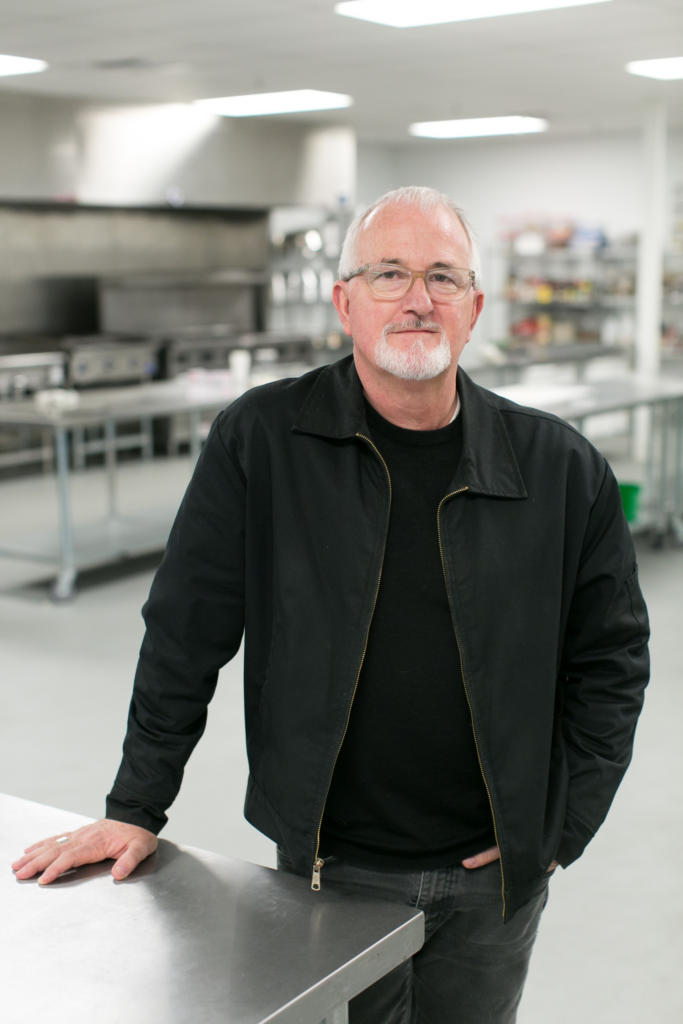
In October, JCF hosted a visit by Robert Egger, a lifelong champion of the “power of food” and the originator of the Community Kitchen movement. He founded the D.C. Central Kitchen, the L.A. Kitchen, and is a Founding Board Member of The World Central Kitchen, Collectively, these organizations have produced over 400 million meals and helped thousands of individuals attain self-sufficiency. Robert is an award-winning author, a James Beard Humanitarian of the Year, and an Oprah Angel. Now a dedicated “elder ally”, Robert makes himself available to entrepreneurs and leaders who long to make change in the boldest and most daring ways possible. So we invited him to come talk to our wonderful community of nonprofit leaders here in Jefferson County. We also interviewed him about the Community Kitchen movement and want to share some of that conversation with you here.
What is a Community Kitchen and how was the early movement started?
When I started DC Central Kitchen there were no job training programs available for people who were unhoused or citizens returning from incarceration. I did not want to start a traditional charity that just gave away food night after night and called it a day. So we opened the first job training program in the country for people living without homes and used recycled food and volunteers to produce healthy meals.
We engaged things that exist in every community – food that was going to waste, people in society being undervalued, kitchens that were underutilized, volunteers that were desperate to make impact, chefs who had food they could donate but they could also help teach. I started with a founding belief in “liberating the receiver.” The idea was “side by side”. That is what differentiated this movement from all others. The folks that once stood in line now learned culinary skills and taught the volunteers. Whether you were the President of the United States, an elder who wanted to stay active, a kid who had to get service hours, or someone who was home from prison just trying to gain skills, everyone was working next to one another to make the community better. In short, nothing works unless we work side by side. That is what defines a good community kitchen
What does one need to start a Community Kitchen?
People think that because we started in Washington D.C. or L.A., we had access to more resources but everything we used is in your town too: food that is being wasted, kitchens that are under-utilized, people that need skills and volunteers who want to help.
I am so impressed with the culinary programs of the Port Townsend and Chimacum School Districts. In general, school cafeterias are one of the most underutilized learning laboratories in America. Young people learn a range of skills there. Take, for example, my daughter who, like me, is a manipulative learner and math was Greek to her. But we could go into a kitchen and use measuring cups to teach fractions. A kitchen in a school is an amazing resource to teach science, nutrition, algebra, history, and culture all while you are preparing food.
Hospitals also have new opportunities. I am also very impressed with the work of Chef Arran Stark at Jefferson Healthcare. The idea of food and medicine is a profoundly important thing. It’s one thing to say “we have served a lot of meals” but have they been healthy meals? As society ages, as we are now, the quality of the meals we produce is essential. His leadership is so important.
These kinds of kitchens also make a new kind of chef possible. Traditional culinary schools still focus on fine dining and healthcare food programs are traditionally institutional and mass produced. Community kitchens can inspire up-and-coming chefs who want to be more like World Central Kitchen…activist chefs focused on things like community development and nutritional activism. There is tremendous opportunity in culinary curriculum to teach a whole different idea of what a chef does these days.
With the great view that you have nationally and internationally, when you think of a small rural community like Jefferson County, what is one message you would like to share?
I am a huge champion now of thinking and acting intergenerationally. Traditionally, our systems have divided people: if you are a child, go here; if you are a senior, go there; if you are poor, stand in line over here. I believe that has been a destructive force. Often times when we talk about agriculture, we smoosh the words together but I love the concept of “agra” + “culture”. The beating heart of agriculture was the idea of intergenerational learning.
One of things that is so obvious from my work with food is that it is so easily thrown away because it is old or bruised or beyond its date. Sadly, our society does the same thing with people. Every single morning in America, 10,000 people turn 70 – every day – and that is going to continue for the next 18 years and we are not prepared. We need to find ways to reach out and pull our elders back in and activate them, whether through volunteerism, working side by side with kids in a garden or in a kitchen, intergenerational is where it is at. It’s all there in your community. You just need to be bold enough. Tilt your head to see things a little differently. It is what Chef Stark is now doing at the Jefferson County Fairgrounds with the new Food Lab. He is asking what is already there in a community that we have looked at 100 times, but we never saw what it could really be. That is the power we have working together.