
Heading west away from downtown Port Townsend, I take a right off of Hastings Avenue, get out of my car and let myself in through a swinging iron gate, and all of a sudden I am in a botanical oasis. Situated on a little over six acres containing one of the larger wetlands in Port Townsend, Far Reaches Botanical Conservancy (FRBC) is a dreamscape of some 5,000 different plants, give or take a thousand.
The vision of Kelly Dodson and Sue Milliken, a pair of outdoor enthusiasts who first met on a seed-collecting expedition in China in 1997, subsequently starting the rare plant nursery Far Reaches Farm in 2000. In 2017 they formed the nonprofit FRBC with the goal of collecting, conserving, and distributing as many rare and endangered plants as possible while creating a living reference collection for education, public enjoyment, and scientific study.
As I sat with them under a gazebo with a roof layered with multicolored lichens, moss, and sedums, Sue told me, “You know, we’re kind of like a Noah’s Ark of plants here.”
While not hewing exactly to the biblical story, FRBC’s efforts do serve to fight back against the accelerating loss of habitat due to climate change and changing environmental regulations. True to the origin story of Far Reaches, Kelly, Sue, and their Collections Manager, Silas Zoeller, continue to source rare plants through expeditions, partnerships, and cultivation.
Collecting
Collected Rare Seeds Since that first expedition to Vietnam in 2017 (where Kelly and Sue discovered a new species of Heteropolygonatum!) FRBC has made acquisition trips to the UK, explored remote areas of China, Northeast India, and Northwest Argentina. In 2025, 20 FRBC members traveled with Sue and Kelly to a seldom-visited ancient relict forest of Monkey Puzzle trees, Araucaria araucana, which was the only population to have survived the ice age glaciation. They also did extensive botanizing in the alpine habitats of Argentina and Chile. They liked that part of the world so much they went back earlier this year with 10 other FRBC members.
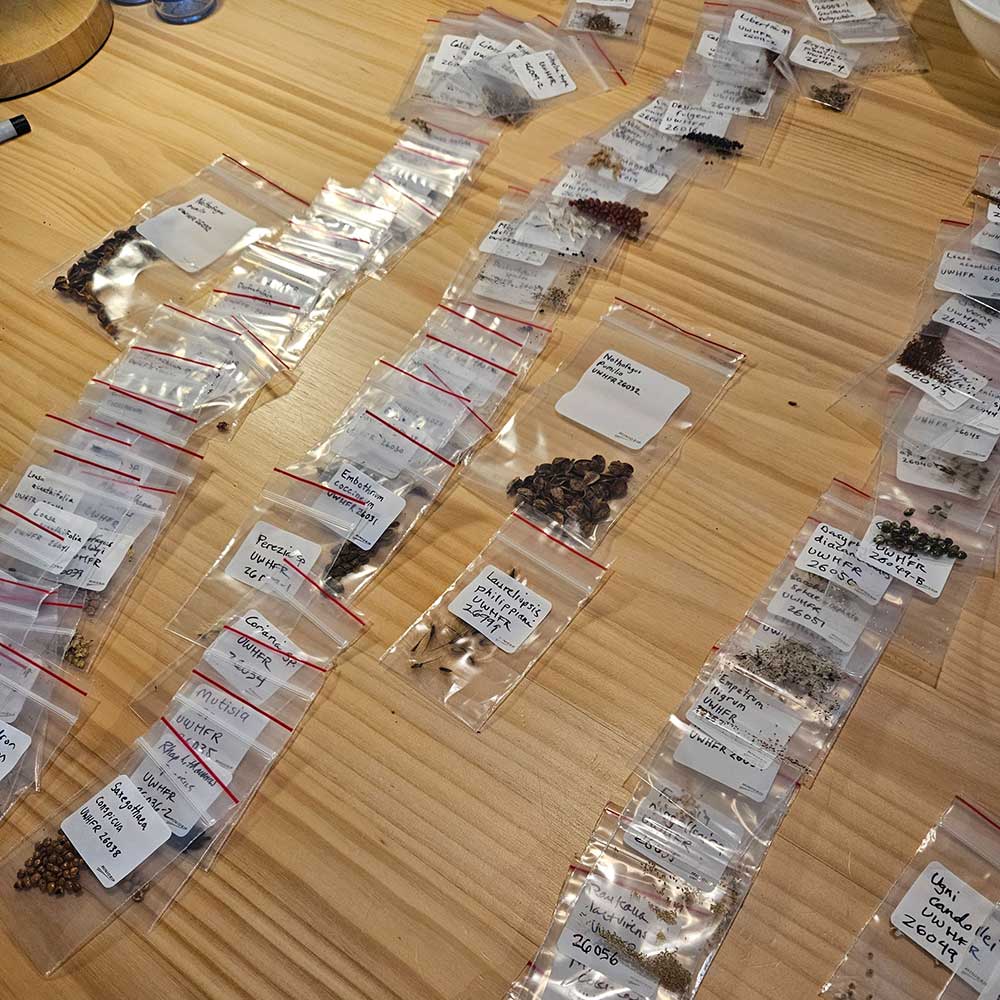
These trips bring back plants that may have undiscovered medicinal or horticultural value or just are unusual and beautiful species. An example of this was when they were in northern Vietnam some years ago and found a living fossil relative of pecans and hickories, Rhoiptelea chiliantha. It had tiny seeds the size of buckwheat. As Kelly tells the story, they only had a few of these plants for sale on their website which sold out right away when a USDA botanist in Texas at their germplasm repository for pecans and hickories emailed them quite distraught to say this plant was impossible to find from wild origin and could be critical to their breeding protocol with profound implications for the future of the pecan market and they are all sold out! Needless to say, Kelly and Sue just gave him some plants.
Conservation
The conservation and propagation of imperiled plants is at the heart of FRBC’s work. It is their botanical creed, similar to Spock’s “Live long, and prosper.”
A stunning example of this is the Crevice Garden that was built on site in 2022-2023. A beautiful sculpture, it provides the perfect growing conditions – a refugia as Kelly puts it – for some of the most challenged plants in the world: endemic alpine species growing here in the Olympics (and nowhere else on Earth), plants from habitats like the Olympic Mountains that could become extinct in the coming decades.
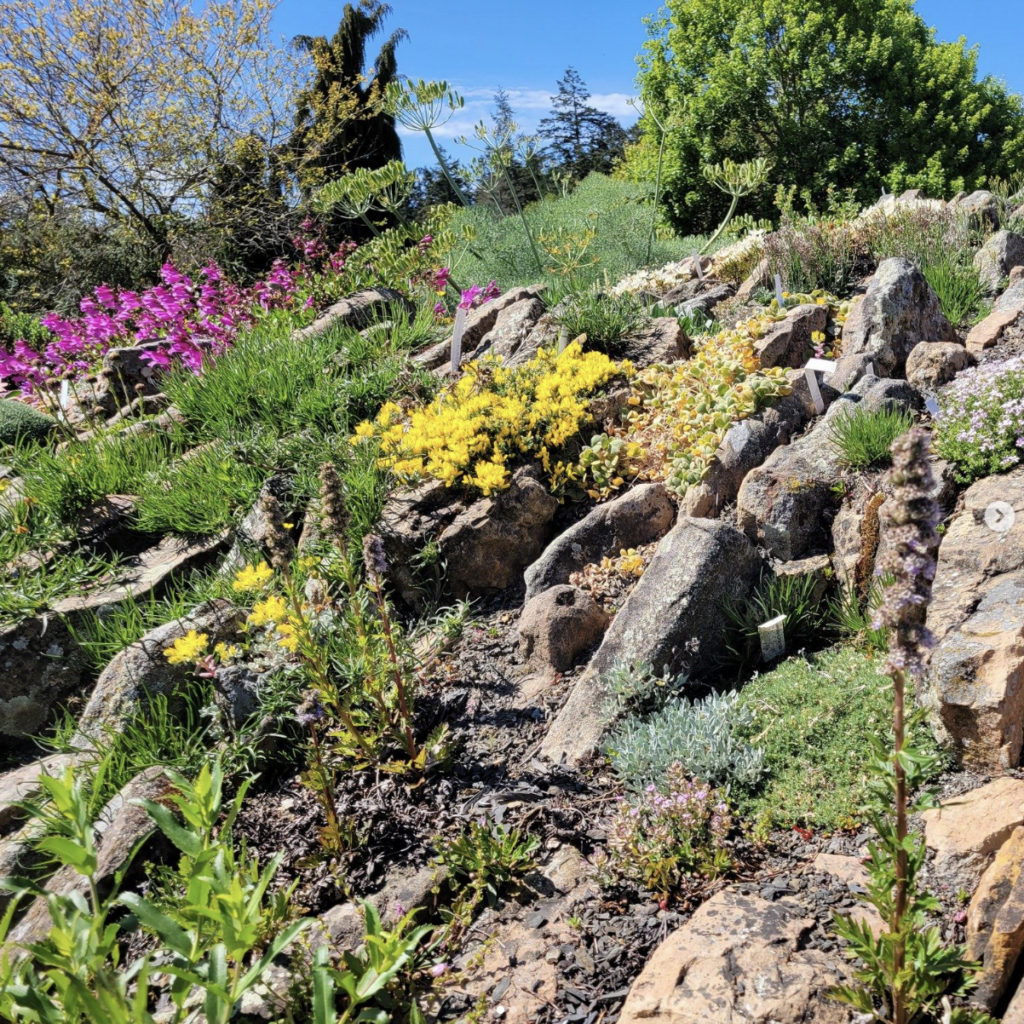
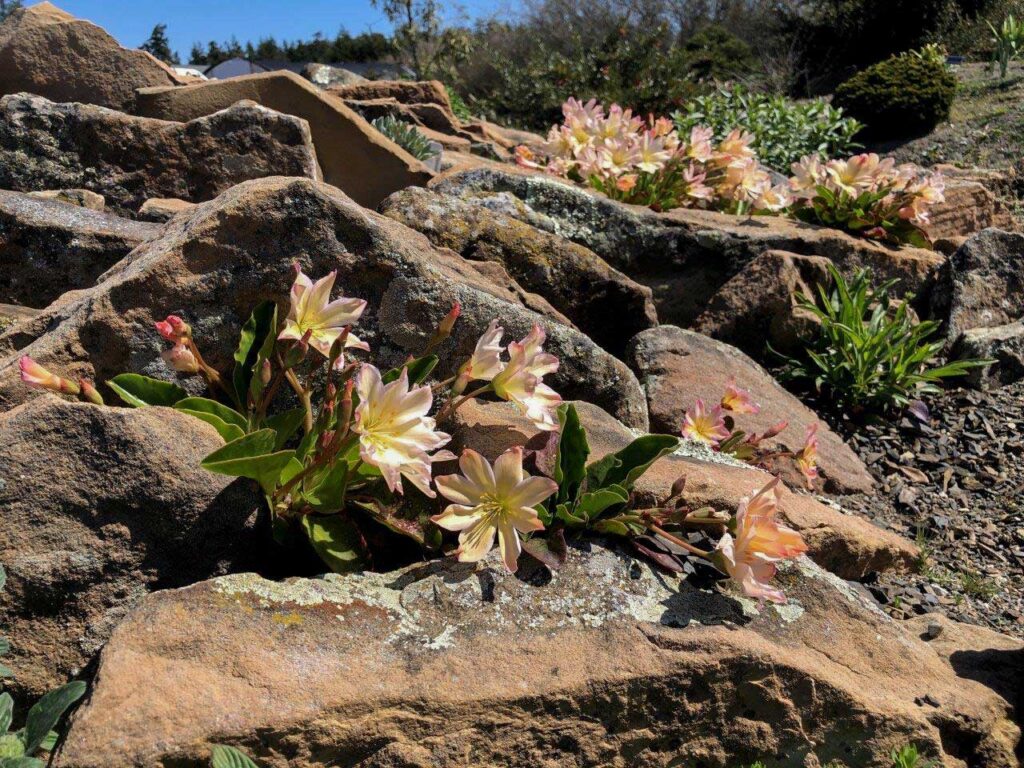
It is an important conservation tool, educational pulpit, and an inspiration to public gardens, horticultural experts, and home gardeners alike who can recreate these conditions in any size, including containers. The Crevice Garden Lewisiopsis tweedyi
Another remarkable achievement occurring naturally on the property is the ever-expanding number of pollinators that live in and around the property. Not only are the wetlands full of frogs, salamanders, ducks, and two species of rails, but there are pollinators everywhere.
Sue points out, “We’ve increased the diversity of insects and birds here a lot since we bought the property. I mean, it’s magical – it’s a little reversal of climate change right here.” Kelly chimes in that he saw a bee swarm coming out from a Catalina Ironwood Tree by the main house. Sue adds that they keep the doors of the greenhouses cracked open in winter for the Anna’s hummingbirds (Calypte anna) that overwinter on the property.
Distribution & Education
As the sole holder of many rare plants with irreplaceable genetics, FRBC believes the best way to ensure long-term survival is by sharing them far and wide. This practice is called ex situ conservation, and it allows plants to survive and perpetuate in compatible habitats. When I asked Silas about this, he put it this way: “The biggest part of my job is trying to get this stuff from behind this gate, out in the world to be shared.”
In addition to the hands-on, day-to-day tasks of watering, potting, and propagation, Silas works on “curating the data, keeping track of what’s in the collection, and then sharing it with our network around the world,” including places like the Asian Gardens at UC Berkeley, the Arctic–Alpine Botanic Garden in Tromso, Norway, the Royal Botanic Gardens Kew in the UK, and closer to home, Heronswood Garden in Kingston, Rhododendron Species Botanical Garden in Federal Way, University of Washington Botanic Garden, and The Spheres in Seattle.
Despite all the international connections, Silas admits the work FRBC does is a niche thing. He tells me, “There’s lots of problems in the world. And so this work can often seem like a very small thing, but I think it has significant consequences for society at large, some of which are not now easily understood.”
I think Silas, Sue, and Kelly would be in agreement with Robin Wall Kimmerer’s line, “Gifts are not meant to be hoarded, and thus made scarce for others, but given away, which generates sufficiency for all.” Silas, Kelly, and Sue.
If you or someone you know would like to support Far Reaches Botanical Conservancy, visit their website, or be in touch with Jefferson Community Foundation to learn more about the many ways to share your gifts.